Key takeaways
- 15 minutes, 40 people. That is the whole visit: a timed slot, a fixed group, then out. People arrive expecting an afternoon in a gallery — what a quarter of an hour actually feels like.
- Released quarterly. The official ticket is real, cheap and sold only by Vivaticket, with reservation compulsory for every ticket type. It goes on sale three months at a time and sells out almost at once — the release, explained.
- All six tours include the entrance ticket. That is the point of them: they hold allocation when the official site has none, and they charge well above face value for it — the gap, stated as a gap.
- Free under 18, €2 from 18 to 25, and free on the first Sunday of the month, booked the Wednesday before. Every one of those still needs a reservation — who qualifies and how to book it.
- Closed Mondays. Otherwise Tuesday to Sunday, 08:15 to 19:00, with last admission at 18:45 — hours and closing days.
- One building, not a gallery. The painting is on the end wall of the refectory of Santa Maria delle Grazie, a working church and convent complex in Milan — finding it and what is on the wall.
What the official ticket buys, and what a tour adds
Two different purchases that people run together, usually after an hour of refreshing a booking calendar that has nothing on it. Both get you through the same door, into the same fifteen minutes.
The official ticket
- Entry to the Cenacolo Vinciano at face value with no booking fee, sold by Vivaticket and nobody else — how to buy it
- A compulsory reservation attached to a named timed slot, which applies to every ticket type including the free and reduced ones
- Free entry for under-18s and €2 for ages 18 to 25, plus the first Sunday of the month free, booked the Wednesday before — the reduced categories
- A release schedule you do not control. Tickets appear a quarter at a time and go within minutes, which is the single reason this site exists — planning around it
- No guide. You get the room and your own eyes for fifteen minutes
A tour that holds allocation
- The entrance ticket, inside the price, on every one of the six here — which is why they exist and what you are really paying for — the six compared
- A licensed guide with headsets, who has the fifteen minutes mapped and will spend them on the wall rather than on your feet
- On the shortest option, entry to the church, the convent and the garden alongside the refectory — ticket and guide, nothing else
- On the longer ones, a walk through the centre and sometimes the Duomo as well, with hotel pickup on two of them — whether the bundle is worth it
- A price several times face value. I would rather say that plainly than dress it up — whether it is worth paying
What the visit actually looks like, in order
Not a walking route — the shape of the visit itself, from the square outside to the moment they move you on.
Every ticket, official or through a tour, runs the same way: the meeting point on Piazza Santa Maria delle Grazie, check-in, the climate-controlled doors, fifteen minutes in the refectory, then out through the shop. The slot is fixed and the doors are timed, so the only part of this you can influence is how much you understand before you go through them.
- Piazza Santa Maria delle Grazie — The meeting point for tours and the entrance for everyone else, on the square beside the church. Turn up before your slot; the doors run to the clock and not to you.
- Check-in, bags and phones — Names are checked against the timed booking, large bags go into storage, and you are told the rules for the room before you are anywhere near it — what the photography rules are.
- The airlock — A set of climate-controlled doors and a holding space between the outside air and the refectory. Groups are let through in one batch, which is what keeps the slot to a maximum of forty people.
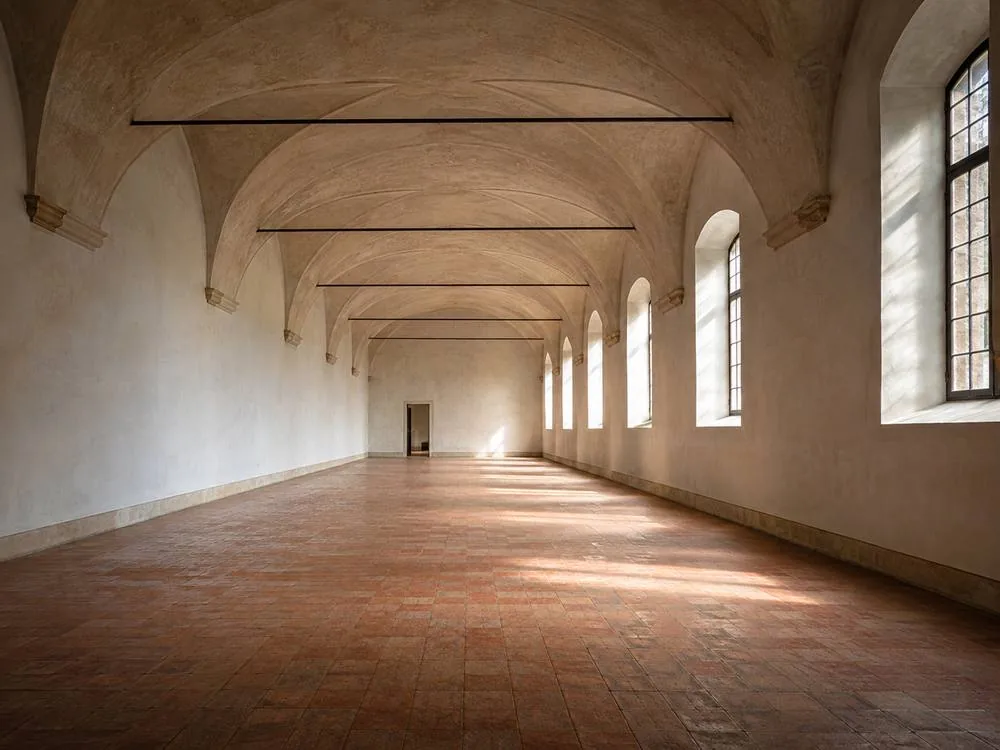
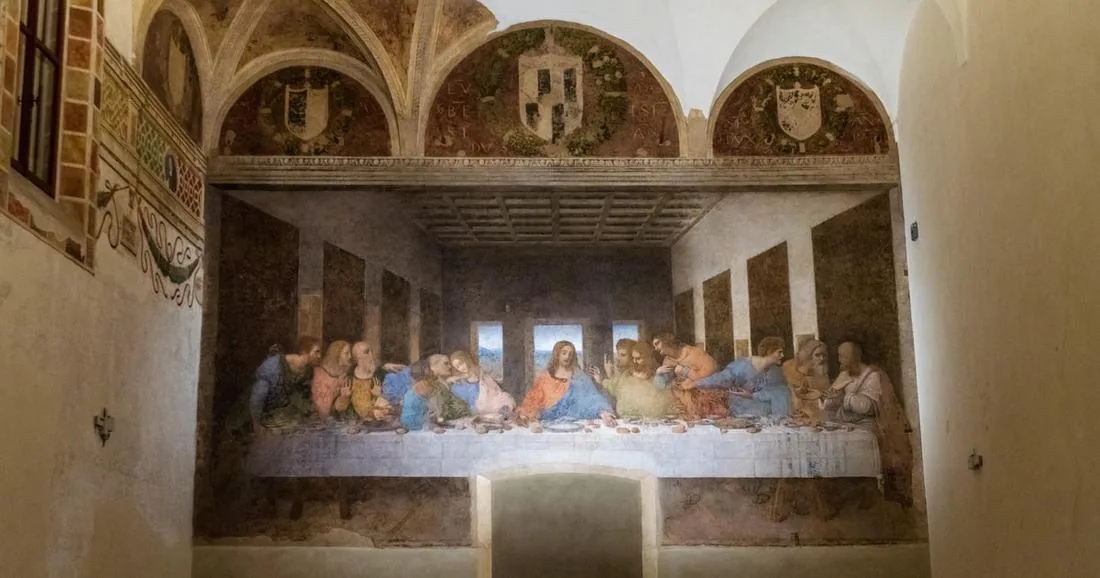
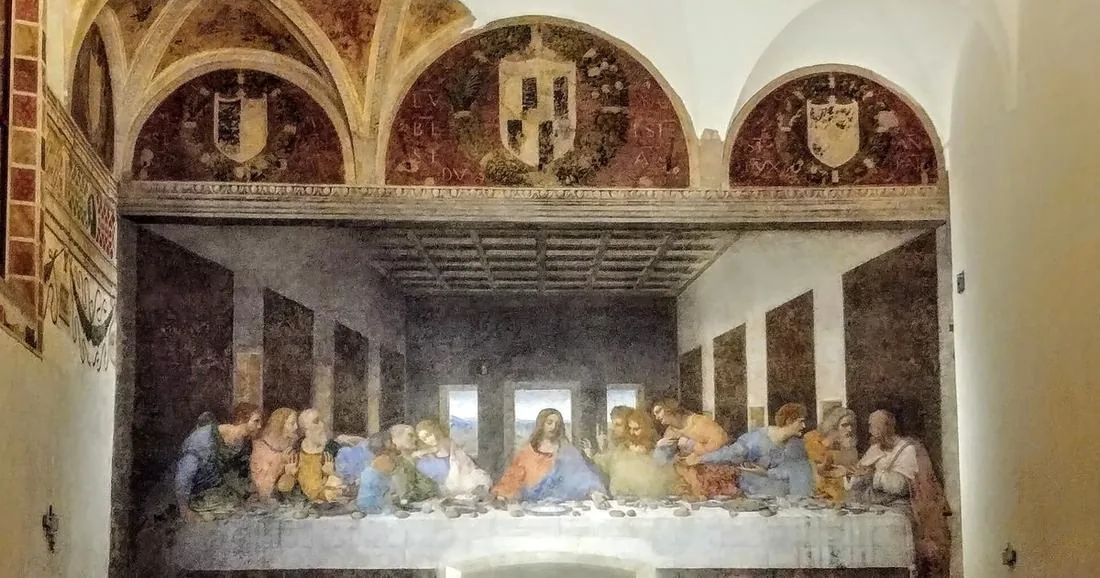
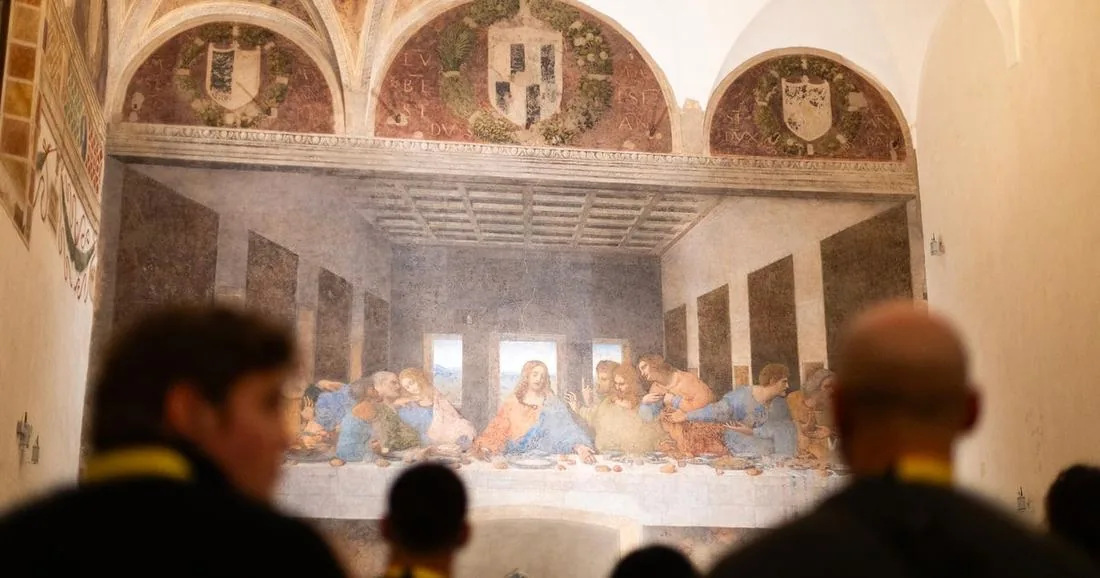
- Fifteen minutes in the refectory — A long barrel-vaulted hall, with Leonardo’s mural covering the end wall in front of you and Montorfano’s Crucifixion covering the wall behind. Almost nobody turns round — what is actually on both walls.
- Out through the shop — The slot ends, the next group is already in the airlock, and the way out runs past the bookshop. There is no lingering and no second look.
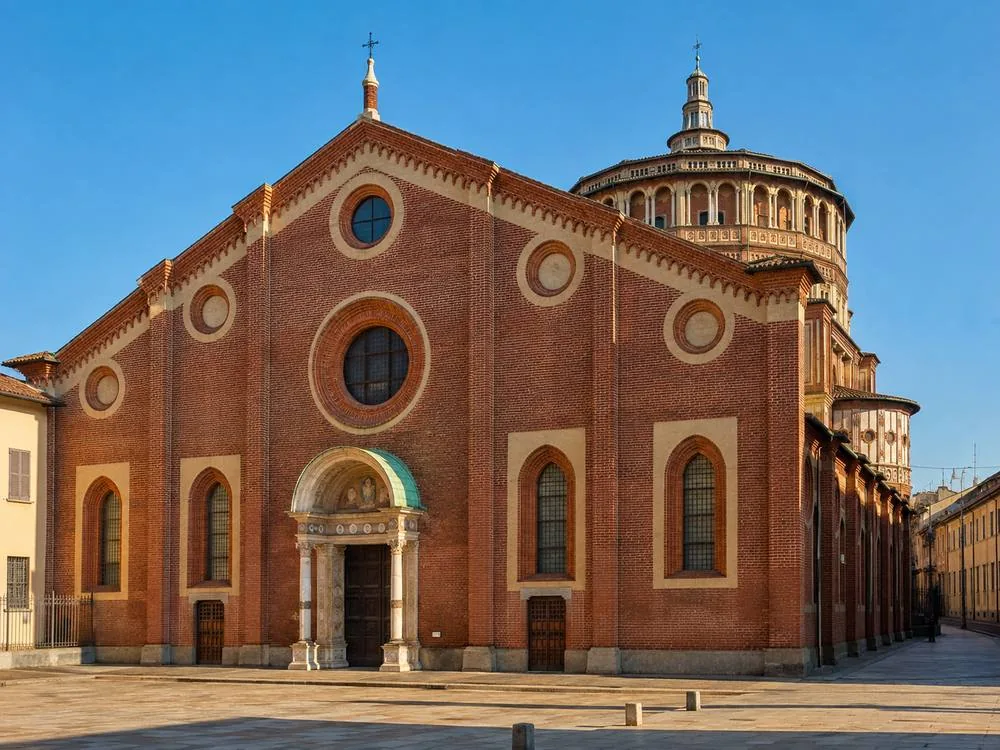
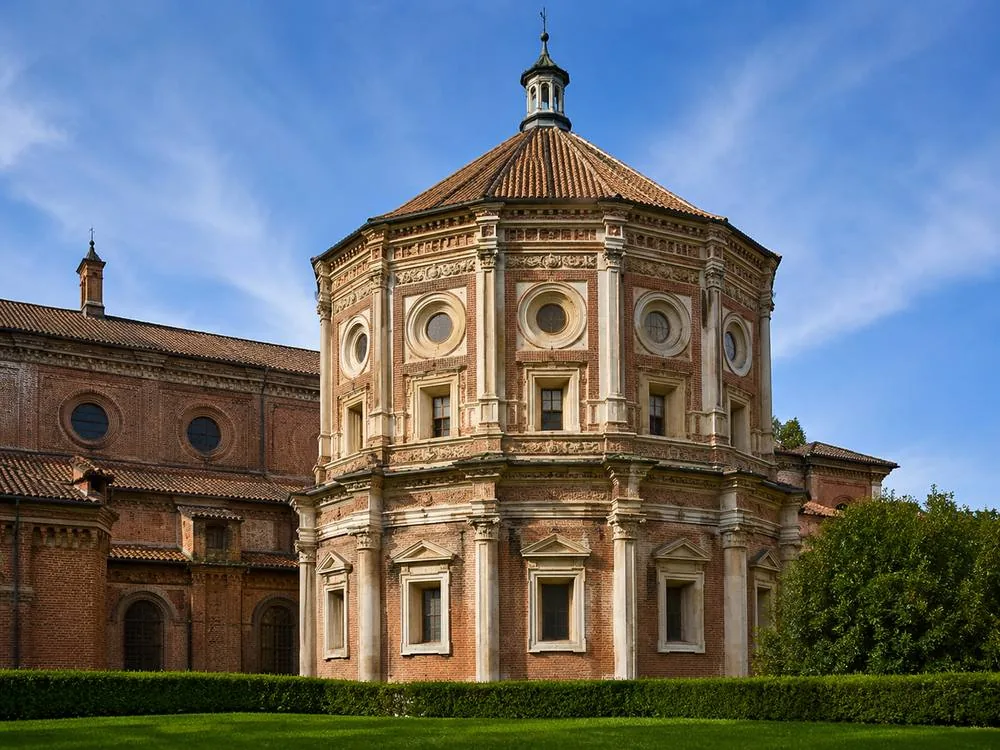
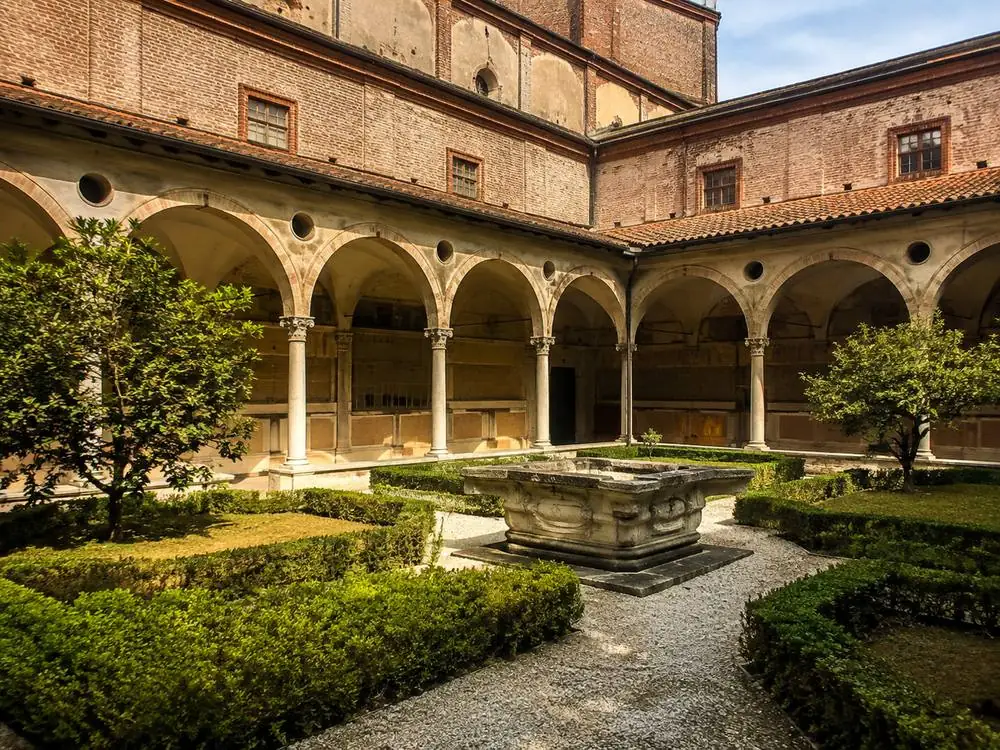
- The church and the Cloister of the Frogs — If your ticket covers them, the Renaissance church next door and its cloister are the unhurried part of the morning, and the brick apse and Bramante’s sixteen-sided tribune are worth the walk round.
Fifteen minutes inside, with a maximum of forty people, and the rest of it is queueing, checking in and walking. That is the honest shape of it, and knowing it in advance is most of what separates people who are glad they went from people who feel short-changed. The long version, including how to spend the fifteen minutes, is in the complete guide.
How booking works
Try the official site first
It is cheaper than anything on this page and we earn nothing from it, which is exactly why I can tell you to go there before you read another word. If your dates are there, take them.
Work out which quarter your trip falls in
Tickets are released three months at a time, so the question is not how early you book but whether your dates have been released at all yet. That is a different kind of planning.
If the official window is shut, pick a tour that holds allocation
All six here include the entrance ticket. What separates them is length, group size and how much of Milan comes attached — and, on one of them, whether the Duomo is in the price.
Read the option you are actually buying
Several listings sell more than one version of themselves, with different durations and different inclusions under the same title. The widget below re-prices by date and party size, so the live figure beats the printed one.
Check dates for the most-booked way in
Three hours: a skip-the-line Last Supper ticket with a timed slot, plus a guided walk of the historic centre taking in Sforza Castle, the Duomo, the Galleria and Piazza della Scala, with a live English guide and headsets. It carries more reviews than the other five put together, which makes it the closest thing to a default on this site.
The door only, the city, or the Duomo as well?
Three of the six, taken to their extremes. Every one includes the Last Supper ticket, so the row that matters is what you get on top of it. Prices and ratings are the live GetYourGuide figures at the time of writing, and every price is a from price that moves with the date.
| Milan: Last Supper Skip-the-Line Entry Ticket & Guided Tour | Most bookedMilan: Guided Walking Tour & Last Supper Visit with Ticket | Milan: Duomo and The Last Supper Skip-the-Line Guided Tour | |
|---|---|---|---|
| Price | $57 / person | $114 / person | $159 / person |
| Rating | 4.8 (1,794 reviews) | 4.7 (6,512 reviews) | 4.7 (1,332 reviews) |
| Last Supper ticket | Included, with skip-the-line entry | Included, with skip-the-line entry | Included, with skip-the-line entry and a guaranteed 15-minute viewing |
| What it includes beyond the ticket | A licensed English guide and headsets, plus the museum, the refectory, the convent and the garden. Nothing else — this is the door and an explanation | A guided walk of the historic centre taking in Sforza Castle, the Duomo, the Galleria and Piazza della Scala, with a live English guide and audio headsets | Skip-the-line entry to the Duomo itself, plus the Galleria and Teatro alla Scala, headsets, and hotel pickup and drop-off |
| Duration | 1 hour | 3 hours | 3 hours |
| Hotel pickup | No | No | Yes, pickup and drop-off |
| Best for | Anyone who wants in and nothing else, at the smallest gap over face value here | Most people, most of the time — the ticket plus a first afternoon in the city | A single booking that settles the Duomo as well, at the highest price on this site |
| Worth knowing | One hour door to door, so build the rest of the day around it yourself — the ticket-only route | The most-reviewed product here by a distance, which is a good sign about consistency rather than a promise about your guide | The only one bundling Duomo entry, and the dearest of the six — is the bundle worth it |
| View → | Book this → | View → |
Photo Gallery
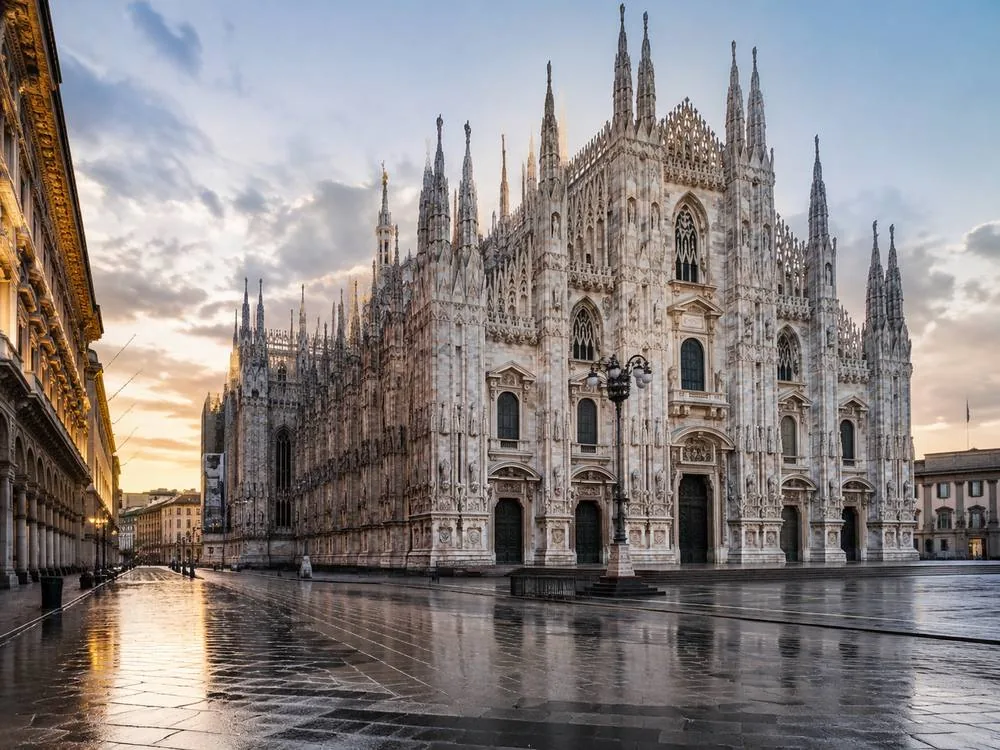
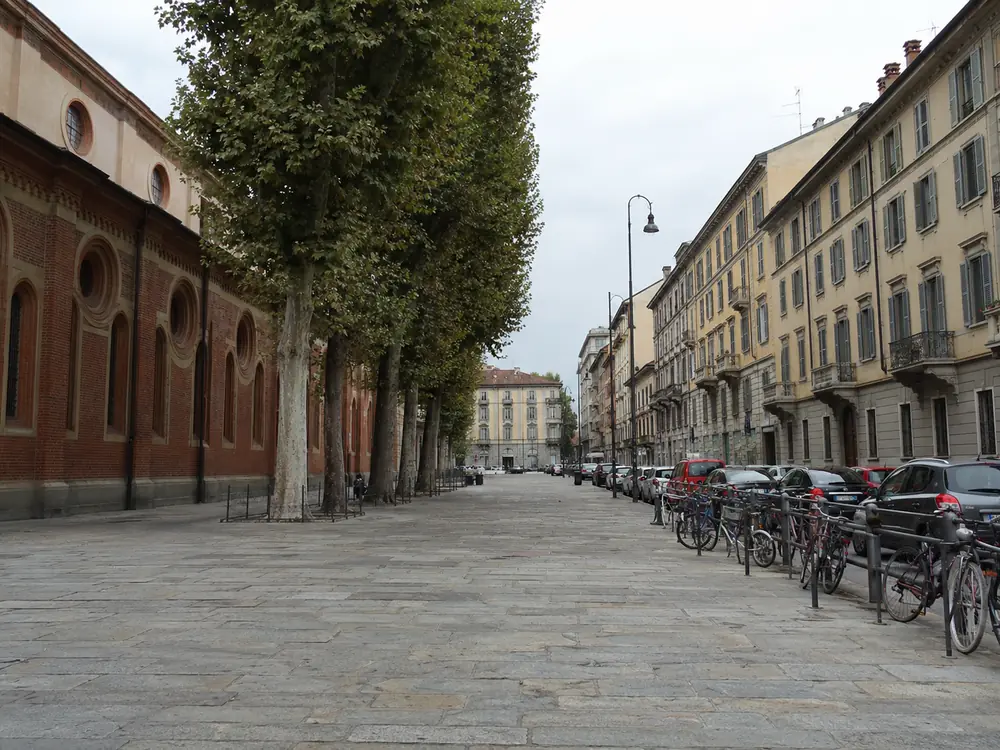
The building, and the streets around it
Santa Maria delle Grazie and the walk most tours attach to it. None of these show the mural: photography of it is restricted, and the room is not a place anyone gets to linger with a camera.
The six tours that include the entrance ticket
Every one of them holds allocation for the refectory, which is the only reason to pay above face value. Each card opens live availability, and each has an honest review on this site — including the ones I would not book first.
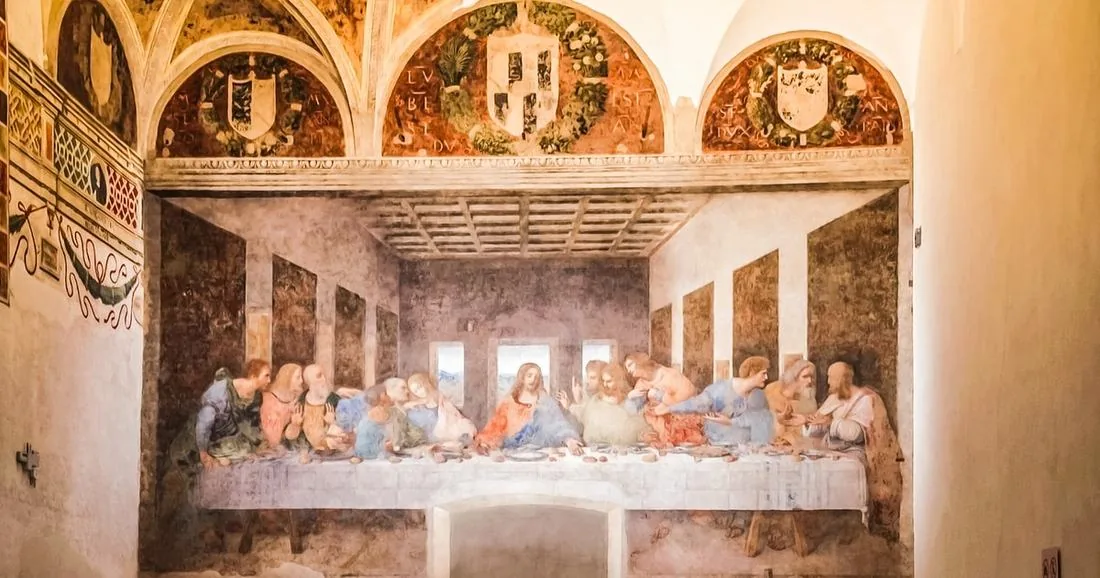 Most booked
Milan: Guided Walking Tour & Last Supper Visit with Ticket
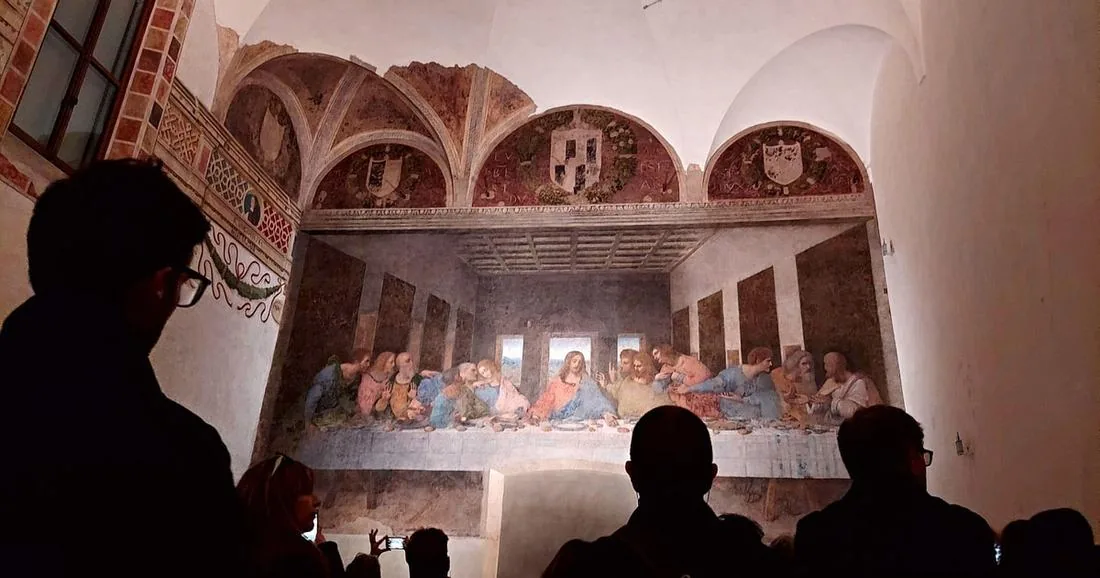 Cheapest way in
Milan: Last Supper Skip-the-Line Entry Ticket & Guided Tour
 With the Duomo
Milan: Duomo and The Last Supper Skip-the-Line Guided Tour
 Highest rated
Milan: Da Vinci’s Last Supper and Guided Walking Tour
 Flexible length
Milan: Da Vinci Last Supper Tour
 Small group
Milan: Best of City Walking Tour with Last Supper Tickets
What people who went actually said
Fragments from GetYourGuide reviews of the six tours compared here. Read enough of them and one pattern does the explaining: almost everybody names their guide. Beyond the ticket, that is what the money buys.
David was a perfect guide, very knowledgeable and attentive to our needs.
I liked the passion of the guide, how he talked about his city.
Flavia was knowledgeable and friendly. We enjoyed learning about the church and the painting.
Viktor was an excellent guide and the tour was very well managed.
Simone was excellent — funny, knowledgeable, accommodating.
Barbara was informative, generous with her explanations and passionate about the subject.
JonLuca was wonderful. We learned more than I thought possible.
Silvia was passionate about her city and most of all flexible.
The guide was extremely professional and gave us tips on how to get to the top of the Galleria for a view of the cathedral.
Ratings and reviews are the operators’ live GetYourGuide figures. Read our full tour reviews ›
Four things people ask me on the square outside
The conversations I had most often in six years of guiding, usually with twenty minutes to go and a phone already open on a sold-out calendar.
Can I just buy the cheap official ticket?
You can try, and you should, because it is the cheapest way in by a distance and we make nothing when you use it. The problem is timing rather than luck: Vivaticket releases the whole quarter at once and it clears within minutes, so whether you can buy one depends almost entirely on whether your dates have been released yet. Reservation is compulsory even for the free categories, so there is no walk-up alternative — how the release works and when to be watching.
Why does a tour cost several times face value?
Because you are not buying the painting, you are buying a slot somebody else secured months ago, and a guide to use it properly. The cheapest option here is ticket-plus-guide for roughly four times the official price, and I would rather call that a gap than a bargain. Whether the gap is worth closing depends on how far you have travelled and how much of the wall you want to understand — the arithmetic and my honest answer.
Fifteen minutes. Is that really all?
It is. Maximum forty people, one timed slot, and then the next group is waiting in the airlock. The people who leave disappointed are almost always the ones who pictured a gallery afternoon; the people who leave satisfied arrived knowing the shape of it and spent the time looking rather than orienting themselves — what the quarter of an hour is like and what to look at first.
Is that a woman sitting next to Christ?
No. The beardless, long-haired figure at Christ’s right is the apostle John, and Renaissance painting conventionally showed John young and unbearded. The Mary Magdalene reading comes from popular fiction rather than from art history or any documentary source. It is the question I was asked more than any other, and it deserves a straight answer rather than a raised eyebrow — the full answer.
Can’t make these dates?
Browse more available Last Supper tickets and find one that fits your schedule — all with instant confirmation and free cancellation.
Seeing the Last Supper, explained
I am Giulia Ferrari. I guided in Milan for six years and I have stood in that refectory more times than I can count, usually watching the same thing happen: somebody works out, about four minutes in, that fifteen minutes means fifteen minutes. Almost everything that goes wrong with this visit goes wrong before anybody reaches the door, and it is fixable with information.
The official ticket is real, cheap, and probably not available
Entry to the Cenacolo Vinciano is cheap. It is sold at face value with no booking fee by Vivaticket and by nobody else, and we earn nothing when you buy one, which is the reason I can be blunt about it: go there first, before you read the rest of this page. Reservation is compulsory for every ticket type, including the free ones, so there is no queue to join and no walk-up counter to charm. If your dates come up, take them and close the tab. The whole route is set out on the official ticket page.
What quarterly release actually means for planning
Here is the part that catches people. Tickets are not drip-fed as the date approaches. They are released a quarter at a time, and the quarter clears within minutes of going on sale. So the useful question is not how far in advance you should book. It is whether the months you want have been released at all yet, and if they have, whether they went while you were asleep in another time zone. Somebody booking flights eight months out will find an empty calendar and conclude the site is broken; somebody booking six weeks out will find the same empty calendar for the opposite reason. Both are looking at a system that rewards being at a keyboard on one specific morning. If your trip is already fixed and that morning has passed, the official window is simply shut for you, and no amount of refreshing changes it. What to do next is on the sold-out page, and the timing itself on booking in advance.
Fifteen minutes, honestly
The visit is a timed slot with a maximum of forty people. You gather on Piazza Santa Maria delle Grazie, check in, leave your bag, and pass through climate-controlled doors that exist to protect a wall painting in poor condition. Leonardo worked on dry plaster rather than in true fresco during the 1490s, which is why the surface began failing within his own lifetime, and why the room is now managed like a laboratory. Then you are in a long barrel-vaulted hall with the mural on the end wall in front of you and Montorfano’s Crucifixion on the wall at your back, which hardly anybody turns round to look at. Fifteen minutes later the next group is in the airlock and you are walking out past the shop.
People expect a gallery afternoon and get a quarter of an hour. I have watched that gap ruin visits, and I have watched people who knew about it in advance spend the whole slot looking at the four groups of three apostles and come out glad. The difference is entirely preparation. What the fifteen minutes feels like and what is on the wall are both worth reading on the tram.
What a guide adds to a quarter of an hour
This is where I have to be careful, because I used to be the guide and I have an obvious bias. So take it from the reviews instead: read enough of them across these six tours and the pattern is impossible to miss. People name their guide. Susan named David, Geri named Flavia, Liliane named Barbara, Theresa named Silvia. Almost nobody writes about the painting; they write about the person who explained it. In fifteen minutes you cannot read a wall label, stand back, think, and go round again. Somebody who can tell you where to look first, and why the composition falls into four groups of three, is compressing an hour of your own noticing into the time you actually have.
What the tours are really selling, though, is the ticket. Every one of the six holds allocation for the refectory, and all of them cost several times face value; the cheapest is around four times it for the ticket plus a guide and an hour. I am not going to call that a bargain. It is a gap, and it exists because access is scarce rather than because anybody has added that much value on top. Whether to close the gap is a straight calculation about how far you have travelled — see what you actually pay and the six compared.
The case for going anyway
I still send people. Not because fifteen minutes is generous, but because of what the fifteen minutes contains: a wall that has been slowly failing for five hundred years, in the room it was painted for, at the scale it was painted at, with the light coming from the same side Leonardo painted it coming from. Reproductions flatten all of that. If Milan is a stop on a longer trip and the official window is shut, book the shortest option, go in knowing exactly what you are getting, and give the hour afterwards to the church and the Cloister of the Frogs, which cost nothing extra on some tickets and where nobody moves you along. My full verdict is on the worth-it page, and the practical detail — getting there, hours, photographs — is in the complete guide.
Frequently asked questions
How much does a Last Supper ticket in Milan cost?
The official ticket for the Cenacolo Vinciano is currently €15 with no booking fee, sold by Vivaticket and by nobody else, with reduced and free categories for younger visitors. That figure is current at the time of writing, so confirm it on the official booking site rather than trusting me. Tours that include the ticket run from $57 for the one-hour ticket-and-guide option up to $159 for the version bundling the Duomo, which is the gap this site exists to explain — face value against what a tour costs.
Why can I never find official Last Supper tickets?
Because they are released a quarter at a time and sell out almost immediately after release. It is not that they book up early in the ordinary sense; it is that three months of slots appear at once and are gone within minutes, so most people planning a trip find a calendar with nothing on it at all. Reservation is compulsory for every ticket type, so there is no walk-up option to fall back on — how the release works and what to do when it is gone.
Do the tours include the Last Supper entrance ticket?
Yes, all six of them, and that is the entire reason to consider one. They hold allocation for the refectory when the official site has none, which is what you are paying the difference for. The cheapest is $57 for a one-hour ticket-and-guide visit rated 4.8 from 1,794 reviews; the most-booked is $114 for three hours with a city walk attached — all six compared.
How long do you get to see the Last Supper?
Fifteen minutes, with a maximum of forty people in the room, on a timed slot. Then the next group comes through the climate-controlled doors and you leave past the bookshop. Setting that expectation properly is the kindest thing anyone can do for a first-time visitor — what fifteen minutes feels like and whether it is worth it.
What are the opening hours, and is it closed on Mondays?
It is open Tuesday to Sunday, 08:15 to 19:00, with last admission at 18:45, and it is closed on Mondays. Book a slot that leaves you time to see the church and the Cloister of the Frogs afterwards if your ticket covers them — hours and closing days and finding Santa Maria delle Grazie.
Is the Last Supper free for anyone?
Entry is free for under-18s and €2 for ages 18 to 25, and the site is free to everyone on the first Sunday of the month, booked the Wednesday before. Reservation is compulsory in every one of those cases, so a free ticket is still a ticket you have to secure in advance. Free tickets by application also exist, but they are not guaranteed — the reduced categories in full.
Which Last Supper tour should I book?
If you want the door and an explanation and nothing more, the one-hour ticket-and-guide option at $57 is the cheapest way in and the highest-rated of the high-volume listings at 4.8 from 1,794 reviews. For most people the three-hour walking tour at $114 is the safe default, with 6,512 reviews behind it. If you want the Duomo settled in the same booking, that is $159. Read the option you are buying, because the flexible listing at $97 spans anywhere from one to six hours — the comparison and individual verdicts.
Is the figure beside Christ Mary Magdalene?
No. It is the apostle John, painted beardless and long-haired because that is how Renaissance convention showed him. The Magdalene claim comes from popular fiction and has no support in art history or in any documentary source. It is the most asked question about the painting and it deserves a plain answer — the art-historical version and what else is on the wall.
Still have questions? Email us [email protected]